
Flexible Aerogel Insulating System
Inducted In: 2012, Consumer, Health, Home, Industrial Productivity/Manufacturing Technology, Medicine, Recreation
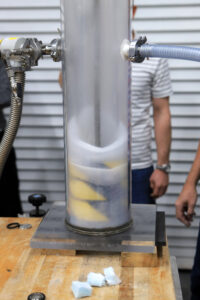
Flexible aerogels were originally developed to serve as a barrier to the extreme temperatures that occur during rocket launches and that affect spacecraft as they are exposed to both high heat and severe cold. Because the initial silica aerogels were fragile and expensive, NASA contracted with James Fesmire, senior principal investigator of the Cryogenics Test Laboratory at Kennedy Space Center, and the startup company Aspen Systems Inc. to produce affordable and easy-to-use aerogel composite blankets for space applications.
Aspen Aerogels continued its development of the product to produce three variations – Cryogel, Pyrogel and Spaceloft – that are now used in industrial, construction, refrigeration, automotive, medical and commercial applications. Examples include:
- Insoles for mountain climbers and endurance runners
- A wrap that helps sufferers of Raynaud’s disease maintain blood temperature and flow in extremities where constricted blood vessels cause pain and discoloration
- Home insulation that, according to Department of Energy, when applied to wall studs in a quarter-inch-thick strip, can increase the wall’s insulation factor by 30 percent
The leading provider in the United States, Aspen Aerogels produces nearly 20 million square feet of the material per year for extreme environments on Earth and in space.
Related Technologies
Microgravity Treadmill
Inducted In: Health
https://vimeo.com/1187451537 Differential air-pressure antigravity treadmill technology originated from research conducted at NASA Ames Research Center focused on mitigating bone loss and muscle atrophy experienced by astronauts during long-duration spaceflight. The technology uses controlled air-pressure differentials applied around the lower body to simulate…
Neurala Brain
Inducted In: Computer Technology, Industrial Productivity/Manufacturing Technology
https://vimeo.com/1187451618 Neurala developed a brain-inspired artificial intelligence technology designed to enable autonomous, continuous learning on edge devices. The commercialized technology, delivered through the Neurala Brain and Neurala VIA (Visual Inspection Automation) software platforms, allows machines to learn new visual concepts during operation without cloud connectivity…
Strained Layer Superlattice (SLS)
Inducted In: Industrial Productivity/Manufacturing Technology
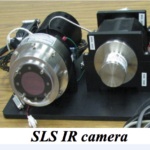
https://vimeo.com/1083588479/a949307161 The Strained Layer Superlattice (SLS) technology developed at NASA’s Jet Propulsion Laboratory is used to manufacture infrared detectors. The enhanced performance and cost-savings of this technology is a significant advancement over earlier technologies. This technology has been employed by…